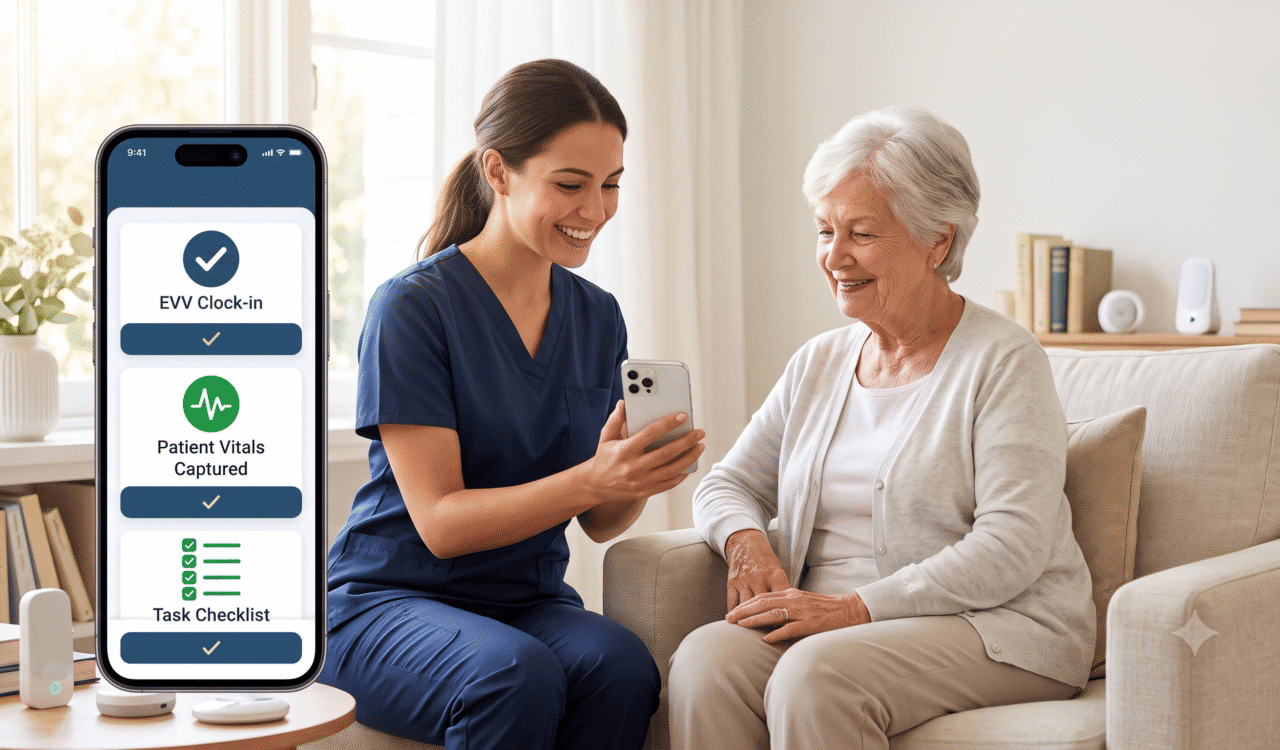
Healthcare is no longer confined to the four walls of a hospital. Driven by demographic shifts, escalating medical costs, and a collective desire for patient independence, the home has become the primary frontline for modern medicine.
From AI in home health care to smart sensors, field automation platforms, and autonomous systems, recent breakthroughs are fundamentally changing how future healthcare technology is elevating at-home care. Below is an in-depth breakdown of the latest home healthcare technology trends, their real-world impact, and the operational hurdles providers face.
1. Artificial Intelligence: The New Backbone of Home Care
Artificial intelligence in home care has evolved beyond simple predictive analytics; it now powers autonomous workflows and real-time patient triage.
- Ambient Intelligence & Fall Detection: Instead of relying on manual panic buttons, home care environments now use AI-powered radar, depth sensors, and ambient computer vision. These systems detect falls, track sleep disturbances, and alert caregivers instantly without invading privacy or requiring wearables.
- Generative AI & Field Documentation: Visiting caregivers use ambient voice AI tools and digital field forms to transcribe patient conversations and instantly record care tasks. This slashes administrative time by up to 20%, allowing nurses to spend more time on hands-on care.
- Predictive Risk Scoring: Machine learning models analyze multi-modal patient data—combining vital signs, lab history, and social determinants of health—to predict decompensation or readmission risk days before clinical symptoms fully manifest.
2. Operational & Field Management Innovations: Spotlighting allGeo Capabilities
While clinical technologies advance at the patient bedside, intelligent field automation platforms ensure operational compliance, caregiver safety, and seamless administrative workflows behind the scenes. Platform solutions like allGeo bridge the gap between back-office operations and mobile caregivers:
- Automated Visit Verification & Geofencing: Using GPS-enabled geofencing, mobile app check-ins, or geotagged IVR phone calls for feature phones, agencies automatically confirm caregiver arrivals, visit durations, and departures without paper logbooks.
- 21st Century Cures Act EVV Compliance: Captures all six federally required Electronic Visit Verification (EVV) metrics—service type, patient, caregiver, service date, delivery location, and exact start/end times.
- State Aggregator & EHR Integration: Eliminates manual data entry by automatically syncing visit records directly with state EVV aggregators (e.g., Sandata, HHAeXchange) and leading Electronic Health Record (EHR) platforms for streamlined billing and payroll.
- Smart Patient Data Collection: Custom digital field forms enable caregivers to collect structured clinical notes, track completed Activities of Daily Living (ADLs), snap photos, and collect digital patient signatures on-site.
- Automated Mileage & Travel Recording: Automatically records real-time travel routes, distances, and idle times between home visits to simplify mileage reimbursement and optimize route planning.
- Caregiver Safety & Lone Worker Protection: Protects isolated home care staff through emergency panic/SOS triggers, automated safety check-in schedules, and instant distress alerts sent directly to agency supervisors.
3. Advanced Remote Patient Monitoring (RPM) & IoMT
The Internet of Medical Things (IoMT) connects smart devices directly into a patient’s central clinical record.
- Biomarker Wearables & Continuous Patch Monitors: Modern wearables track continuous parameters like pulse oximetry, ECG, core body temperature, and interstitial glucose levels.
- Digital Biomarkers & Speech Analytics: Emerging AI tools analyze subtle vocal changes, speech cadence, and facial symmetry via smartphones to screen for early signs of cognitive decline, Parkinson’s disease, or respiratory distress.
- Smart Medication Management: Connected pill dispensers track adherence, automatically alert care teams when doses are missed, and release medications only at prescribed intervals to prevent accidental overdoses.
4. The Shift Toward Virtual Hospitals & Hospital-at-Home Models
The traditional telehealth video call has evolved into comprehensive Hospital-at-Home (HaH) programs.
- Hospital-Level Care Delivery: Patients with acute illnesses (e.g., heart failure, COPD exacerbation, mild pneumonia) receive continuous monitoring, daily virtual physician rounds, and in-person nurse visits right in their living rooms.
- 5G-Enabled Point-of-Care Diagnostic Kits: Visiting clinicians bring compact 5G-connected diagnostic kits capable of running rapid blood panels, portable ultrasound scans (POCUS), and digital stethoscopes, streaming real-time diagnostic imaging directly to remote specialists.
The Future of Home Healthcare Technology
As hardware costs drop and AI capabilities advance, home health care technology will shift from reactive treatment to continuous, hyper-personalized prevention.
| Innovation Area | Current Capability | The Near-Term Future |
| Diagnostics | Periodic wearable data uploads | Multi-modal digital twins that model disease progression and test treatment strategies virtually before prescribing. |
| Robotics | Robotic physical therapy aids & motorized lifts | Assistive cobots handling routine tasks like meal delivery, mobility assistance, and hygiene support. |
| Care Operations | Manual scheduling & location tracking | Predictive dispatch & automated EVV compliance (e.g., allGeo dynamic routing and instant state aggregator uploads). |
| Care Delivery | Virtual visits + periodic nurse dropping in | Autonomous AI Care Agents conducting 24/7 check-ins, managing symptom triage, and updating care plans dynamically. |
What Are the Challenges Faced by Home Healthcare Technology Providers?
While the potential is vast, deploying high-tech solutions into unpredictable home environments introduces significant operational, clinical, and technical hurdles.
- System Interoperability & Data Silos: Many AI platforms and RPM tools operate separately from legacy Electronic Medical Record (EMR) software. Fragmented data creates friction for home health agencies forced to juggle disparate systems.
- The “Digital Divide” & User Adoption: Older adults and patients in rural regions frequently struggle with device usability, cognitive impairments, or lack of reliable high-speed broadband.
- Data Security & HIPAA Compliance: Moving health data outside hospital firewalls over home Wi-Fi networks increases exposure to cyber threats and data breaches.
- Caregiver & Clinician Burnout: Without proper data filtering, continuous RPM streams can cause “alert fatigue,” inundating nurses with hundreds of minor non-critical notifications every shift.
- Reimbursement & Business Model Constraints: Aligning insurance coverage, Medicare/Medicaid billing models, and value-based care incentives with tech implementation remains a complex, slow-moving process.
Key Takeaway
The transformation of home healthcare technology is not simply about replacing hospital beds with home devices; it is about building an intelligent, connected care ecosystem. Providers that pair cutting-edge AI tools and clinical monitoring with robust operational tools like allGeo will define the next standard of care—improving patient outcomes, guaranteeing compliance, and keeping field caregivers safe.